Milestone 2
Access to Quality Care
Birth through age 5
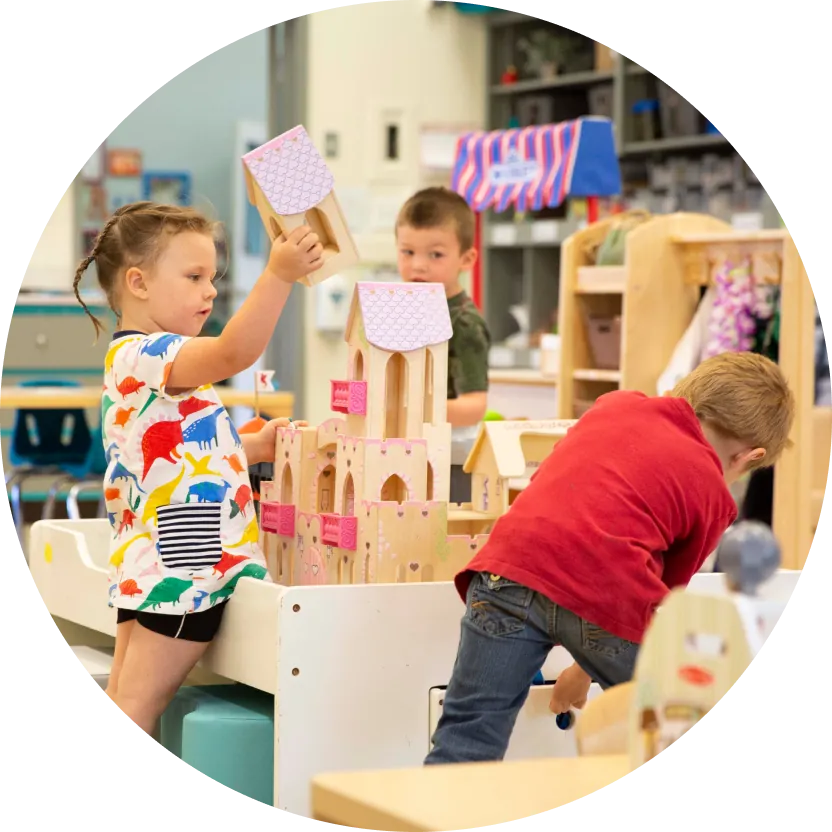
Children need access to quality care in their earliest years to grow, learn, and build a strong foundation for a lifetime of well-being. That means a full range of supports — including child care, special education, well-child visits, behavioral health, and developmental screenings — needs to be accessible and affordable for families.
Why it’s important
The first five years are the most rapid period of brain development in a child's life. When families can access affordable, inclusive, and culturally responsive early learning, child care, and health care, children are more likely to:
- Benefit from consistent relationships, environments, and care.
- Arrive at kindergarten healthy, ready to learn, and with more skills and confidence.
- Thrive in school and throughout life.
Regular well-child visits, developmental screenings, oral health care, and early behavioral health supports help identify and address needs before they become barriers. These services protect children's health and development during the window when intervention matters most.
How Oregon measures up

Oregon is 2nd in the nation in state preschool spending per child at $18,637 per child in 2023–24, allowing providers to offer better wages, longer hours, and higher quality care.
NIEER’s 2024 Oregon State Profile and Oregon press release.

Oregon ranks 14th nationally for state preschool access for 3-year-olds and enrolls 12% of Oregon 3-year-olds in state pre-K, compared to 8% nationally.
NIEER’s Oregon profile provides the rank, while its Oregon press release states that Oregon served 12% of 3-year-olds compared with 8% nationally. These figures include Oregon’s two state-funded programs: OPK and Preschool Promise.

Oregon children are continuously eligible for the Oregon Health Plan until age 6, well above minimum federal Medicaid requirements.



Oregon ranks 34th nationally for 4-year-old preschool access (state pre-K only). This NIEER rank reflects the share of Oregon 4-year-olds enrolled in state-funded preschool (OPK and Preschool Promise) in 2023–24 — about 17% of Oregon 4-year-olds.
Verified for 2023–24 by the NIEER Oregon profile and Oregon press release. The rank covers only state-funded pre-K—OPK and Preschool Promise—not all preschool or Head Start enrollment.

Child Care and Early Learning
Indicator 1
Licensed child care supply
In child care deserts, there are not enough state-regulated child care slots available for the children who need care. A shortage means even families who can afford to pay cannot find an available slot. Because of the higher staffing ratios needed when caring for infants and toddlers, these slots are often both the scarcest and the most expensive to maintain.


Oregon recommendations
Indicator 2
Child care affordability
Systemic barriers — including inadequate funding, waitlists, and limited provider participation — prevent income-eligible families from accessing Oregon’s Employment Related Day Care (ERDC) program. Even for many middle-income families, and some higher-income working families, child care remains unaffordable.


Note: Oregon’s ERDC program has a waitlist due to increased demand and limited funding. To qualify, families must have an eligible child care need, which includes employment, school or job training, TANF participation, or involvement with child welfare. Through recent expansions, families experiencing homelessness, domestic violence, or teen parents may also qualify. Families generally must enter below 200% of the Federal Poverty Level (FPL), with eligibility extending up to 250% FPL or 85% of state median income. Children are now eligible regardless of immigration status. (DELC ERDC Program Page; ERDC Immigration Status Expansion)
Oregon recommendations
Build toward affordable, high‑quality preschool access for all children, regardless of income, geography, or setting, because early learning is a public good.
Reduce paperwork burdens, delays, and churn that prevent families from receiving assistance.
Align subsidy and preschool funding strategies with the true cost of care, so providers can retain staff and serve families consistently.
Design solutions that address how child care affordability burdens middle-income as well as low-income families.
Center subsidy access and preschool expansion around the realities of rural communities, immigrant families, communities of color, and families working nontraditional hours.
Indicator 3
Access to early learning
State-funded preschool (Oregon Prenatal to Kindergarten and Preschool Promise) and federal Head Start and Early Head Start, which are designed to serve children facing the greatest barriers to early learning and healthy development, are limited by available funding. Even when a child qualifies, there may not be a publicly funded slot available for them.


Oregon recommendations
Indicator 4
Early Intervention and Early Childhood Special Education
When Early Intervention (EI, ages 0–3) and Early Childhood Special Education (ECSE, ages 3–5) services are inadequate or delivered in segregated settings, we miss opportunities to intervene during critical windows of brain development, leading to higher long-term costs across the K–12 system and increased family instability.


Oregon recommendations
Increase the number of early learning settings that can serve children with disabilities alongside typically developing peers, especially in communities where inclusive options remain limited.
Provide sustained funding for specialized staff, coaching, training, and classroom supports so inclusion is meaningful and responsive to children’s individual needs.
Use IDEA‑aligned measures that track timely, individualized services delivered in natural and inclusive environments.
Prioritize policy and funding changes for children with more significant support needs, who remain the least likely to access inclusive early learning settings.
Health Care
Indicator 5
Access to early health care
Even insured children may not receive adequate care and services, such as routine well-child visits, developmental screening, oral health services, and early behavioral health supports. For children on Medicaid, these services are part of Early and Periodic Screening, Diagnostic, and Treatment (EPSDT), the federal pediatric benefit designed to deliver comprehensive preventive, dental, developmental, mental health, and specialty care.

Age grouping aligns with Oregon’s continuous eligibility policy.


Oregon recommendations
Children have unique needs, and OHA should require data on network adequacy to be disaggregated by age range.
Indicator 6
Access to early social-emotional health services
National research suggests between 13% and 25% of preschool-age children have social-emotional or behavioral health needs. Oregon Health Plan set a goal of delivering social-emotional supports to 11% of enrolled preschool-age children in 2025, which is below the range of identified need. Only 5% of Oregon children ages 1–5 enrolled in OHP received social-emotional supports, far short of both the national level of identified need and Oregon’s own goal. Low rates reflect system capacity gaps, including provider shortages, limited referral pathways, and inadequate reimbursement for community-based behavioral health care.


Oregon recommendations
Expand and sustain the workforce serving children ages 0–5, including community‑based providers and integrated settings such as pediatric, early learning, and home visiting environments, where young children and families already have relationships.
Ensure developmental and social‑emotional screenings lead to timely intervention by improving referral pathways, care coordination, and follow‑through.
Leverage Oregon’s CCO Incentive Metrics to hold the system accountable for improving access to social‑emotional health services.
Increase reimbursement rates and reduce administrative barriers for community‑based behavioral health care so provider capacity can grow to meet demonstrated need among young children.
Acting on the data
In addition, Oregon’s rate of children’s health insurance coverage is among the highest in the nation, yet too many families still face barriers to receiving consistent, connected care, especially for families in rural communities and communities of color. With Federal Medicaid cuts under H.R.1 projected to cost Oregon $4.4 billion in 2027-29 and $6.9 billion in 2029-31, access may be even more challenging.